This article contains affiliate links. We may earn a commission if you buy through them.
The power flickers during a summer thunderstorm and you’re weighing a clean, quiet backup that can keep essentials running without fumes. The ALLPOWERS R2500 Plus lists 2016Wh of capacity, a 2500W pure sine wave inverter, a 15ms UPS feature and generous solar input—numbers that matter if you want a fridge, network gear, tools or an RV circuit to stay online. This guide translates those specs into what you can expect in real use and how to plan solar so you don’t hit input limits.
ALLPOWERS R2500 Plus: where it fits and where it doesn’t
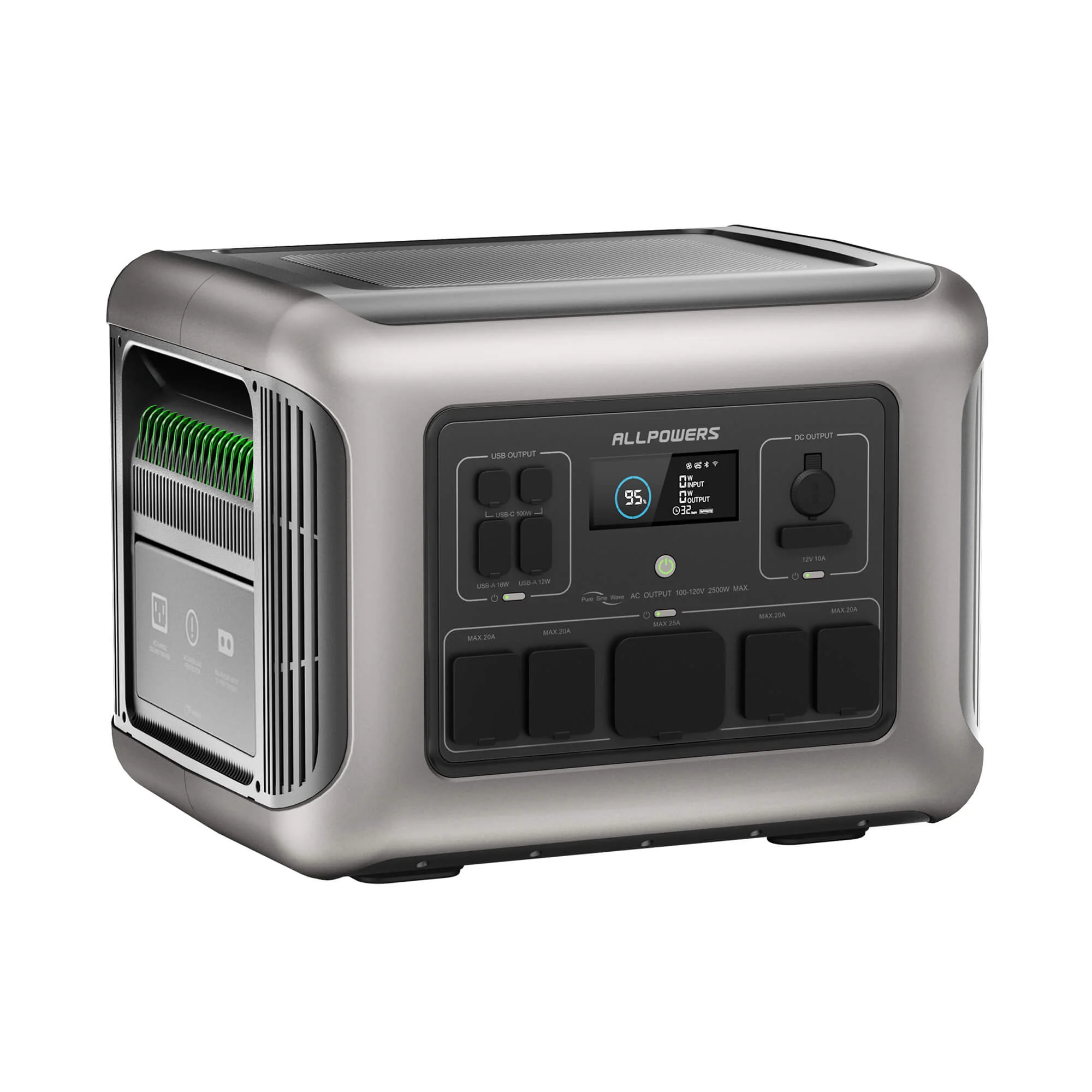
If you want a mid‑size unit for home essentials or an RV sub‑circuit, ALLPOWERS positions the ALLPOWERS R2500 Plus Portable Power Station as a 2016Wh, 2500W option with a 4000W peak. That output class can run many refrigerators, networking equipment, light power tools, and smaller space‑heating or cooking appliances—so long as their continuous draw and startup surge stay within the inverter limits. Pure sine wave for sensitive devices means laptops, routers and other electronics get a clean waveform.
The brand lists four 100–120V AC outlets alongside high‑power USB‑C and USB‑A ports. There’s app connectivity over Wi‑Fi and Bluetooth to check status and adjust settings. R2500 Plus also supports an uninterruptible power supply mode with a listed 15‑millisecond switchover; UPS switchover listed at 15ms helps keep desktops, modems and similar gear from dropping when utility power blips.
Know two early tradeoffs. First, in UPS mode, the site specifies the maximum output is 1500W on a typical 15A household circuit; if you need the full 2500W, use the battery output directly instead of pass‑through. Second, this is a roughly 64‑lb class unit (listed 63.93 lb), so it’s meant to park near where you’ll use it rather than carry around frequently.
Finally, LiFePO4 cells with a stated 3500+ cycles prioritize longevity and safety over weight savings. That’s a reasonable exchange if you value cycle life, but it’s worth planning your placement before an outage or trip.
What 2016Wh and 2500W mean for real‑world loads
What do 2016Wh and 2500W mean day‑to‑day? Capacity (Wh) is the size of the battery tank; inverter output (W) is how much power you can draw at once. A device’s watts divided into capacity gives a rough upper bound on runtime, but real results vary because inverters and converters aren’t lossless. Plan for inverter losses and the fact that some devices cycle on and off, while others (like heaters) run at a steady draw.
On the outlet mix, the ALLPOWERS R2500 Plus Portable Power Station provides four 100–120V AC outlets, plus USB‑C ports that support up to 200W and multiple USB‑A ports. That lets you charge high‑draw laptops from USB‑C while reserving AC for appliances. If you routinely run multiple medium loads at once (for example, a fridge and a microwave in sequence), the 2500W continuous rating offers more headroom than smaller stations.
Surge‑heavy appliances (certain air conditioners, compressors) can still exceed a 4000W peak. The inverter rating sets a hard ceiling; if a device won’t start, it’s usually the startup surge exceeding that threshold, not the average running wattage. Checking nameplate watts and typical starting surges before you buy is the surest way to avoid surprises.
Recharging speed and solar pairing that actually fits the inputs
Recharge speed determines whether your setup keeps up with your loads. The site lists up to 1500W AC input, solar input of 12–150V at up to 20A with a 1000W max solar on R2500 Plus, and dual charging (AC + solar) up to 2000W. That means a well‑sized array can meaningfully refill the battery during good sun, and AC can quickly top it off before a storm or drive.
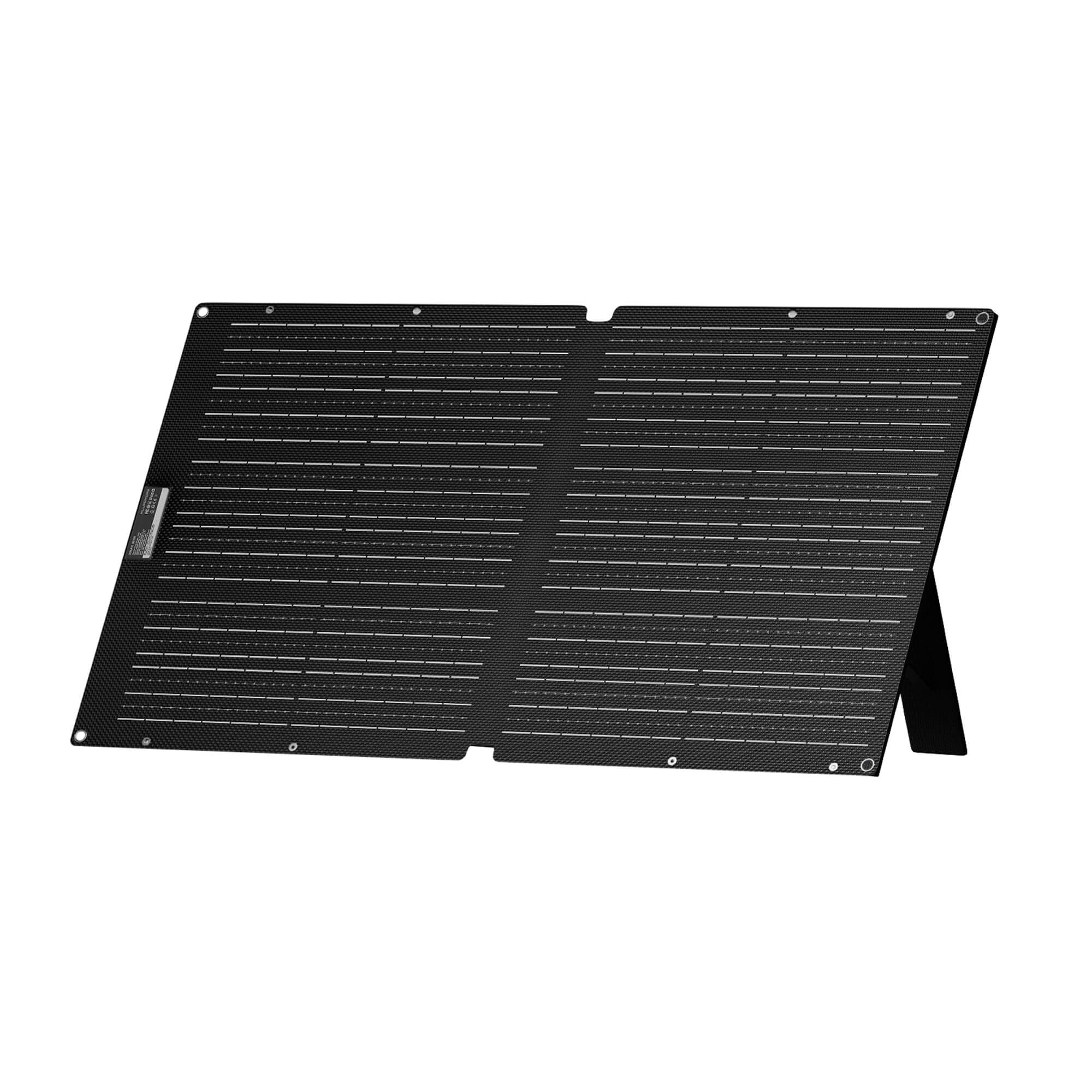
Size arrays within 12–150V and 20A (R2500 Plus). Overshooting voltage or current can trip protections; undersizing simply slows recovery. For a concrete reference, the ALLPOWERS 100W Laminated Integrated Solar Panel SE100 lists a Vmp around 20.8V and Imp around 4.8A, with an IP68 laminated design and ETFE surface. Several SE100s in series raise voltage; in parallel they raise current. Either way, keep the combined array inside the station’s 12–150V and 20A window.
If you plan a larger roof or ground array, sketch a few combinations on paper: for instance, five 200W class panels may fit better as series‑parallel strings than a single series chain. The goal is to land safely under 150V open‑circuit and 20A, while taking advantage of clear sun hours in your region.
Compatibility extends across models but with different limits. The ALLPOWERS R1500 Portable Power Station 1800W 1152Wh LiFePO4 Battery lists solar input up to 650W in a 12–60V, 13A range. If you might reuse panels between systems, match your array plan to the narrower device first, then enjoy the higher ceiling on the R2500 Plus.
When you’re ready to explore options and confirm current input specs, visit ALLPOWERS and look for the charging details for the models and panels you’re considering.
How UPS mode behaves for home backup
UPS mode keeps attached devices running when grid power drops. The site describes a 15‑millisecond switchover, which is fast enough for many desktops, routers and switches to ride through without rebooting. That’s helpful if you’re safeguarding workstations or a home office, or if you want your network and smart devices to stay reachable during an outage.
There’s an important boundary: UPS mode limits output to 1500W on a typical 15A household outlet. That’s about continuity, not maximum power. If you need to run heavier loads during an outage, disconnect pass‑through and use the battery output directly from the ALLPOWERS R2500 Plus Portable Power Station. Planning which devices remain on UPS and which you’ll switch manually is the simplest way to avoid tripping a breaker when the lights go out.
Battery chemistry, cycle life and safety management
The R2500 Plus uses LiFePO4 cells—a chemistry known for stability and long cycle life. The site cites over 3,500 cycles with a statement that even with daily use it will last about 10 years or more. Treat those as durability signals rather than a universal timeline, and pair them with placement that allows ventilation for charging and discharge.
Safety management comes from the brand’s listed high‑performance BMS, with protections covering high temperature, over/low voltage, overcurrent, overload, short circuit and charging overvoltage. Those layers help the system shut down safely when inputs or outputs go out of bounds.
The tradeoff is mass: LiFePO4 packs more weight per watt‑hour than some ternary lithium chemistries. If you rarely move your station, that’s a non‑issue. If you expect frequent relocations, weigh the benefits of cycle life against portability. LiFePO4 cycles: 3500+ (site claim) sets expectations for long‑term ownership.
Choosing between ALLPOWERS R1500 and R2500 Plus
Choosing between models often comes down to portability versus headroom. The ALLPOWERS R1500 Portable Power Station 1800W 1152Wh LiFePO4 Battery is listed at 1152Wh with a 1800W inverter (3000W peak) and weighs in the ~37‑lb class. It fits smaller loads, brief outages, and travel where carrying the unit matters. Solar input is up to 650W in a 12–60V, 13A range, which suits compact arrays.
The ALLPOWERS R2500 Plus Portable Power Station steps up to 2016Wh and 2500W (4000W peak) with solar intake up to 1000W in a 12–150V, 20A window. It is heavier at a listed 63.93 lb, but the extra capacity and output allow more concurrent appliances or faster solar replenishment when the sun cooperates.
Match model to loads and recharge window: if your essentials total well under 1000–1200W and portability matters, R1500 is the simpler fit. If your plan includes a fridge plus other small appliances, or a higher‑wattage tool now and then, the R2500 Plus provides useful overhead and a bigger solar runway.
What’s in the box, expansion, and policies
Unboxing details help avoid last‑minute cable hunts. The product page notes that the standalone R2500 Plus package includes the station, AC charging cable and manual—but not a car charger or solar panel cable. Solar kits include the solar cable; when you buy a power station and solar panel together, the brand says the items ship separately. If you’re planning car or solar charging with a standalone station, budget for the appropriate cable.
Expansion and policies are also listed up front. R2500 Plus is described as expandable with up to three B1000 batteries. The site shows local (U.S.) warehouse shipping, a five‑year warranty on product pages, and a 30‑day return policy. Before purchasing, visit ALLPOWERS to confirm what ships in the box for your specific configuration and to review current policy terms.
Using the ALLPOWERS app for monitoring and control
The app adds convenience for fixed installations or when the unit sits out of reach. The site lists power monitoring, function settings, remote control and firmware updates over Wi‑Fi and Bluetooth. That’s handy for checking input/output, toggling ports and adjusting settings without walking to the unit. Monitor and tweak without touching the unit captures the value for home offices and RVs alike.
Firmware update support appears across the lineup. For example, the R2500 V2 page indicates upgrades via USB and over‑the‑air (OTA) in addition to app control, a useful sign that software features and fixes can improve over time. If that matters to you, look for the firmware options on the model page when you visit ALLPOWERS.
Next step: list the devices you want to power and note each one’s running watts and any known starting surges. If the total sits comfortably under your chosen inverter’s continuous and peak limits—and your planned solar stays within the specified voltage and current window—you’re ready to compare configurations on the brand’s site.