This article contains affiliate links. We may earn a commission if you buy through them.
You’re planning a performance fuel system and want to stop chasing mismatched fittings and vague specs. The goal is simple: clean, stable delivery for your build—whether that’s an LS swap, a drift-focused coupe, or a restomod. The sticking point is picking parts that actually work together in an EVIL ENERGY fuel system: which micron filter goes where, an external pump that flows at your pressure, a regulator that matches your injectors, and whether a cube fuel cell makes more sense than your factory tank. Here’s how to make that call using official specs instead of guesswork.
Why consider an EVIL ENERGY fuel system now
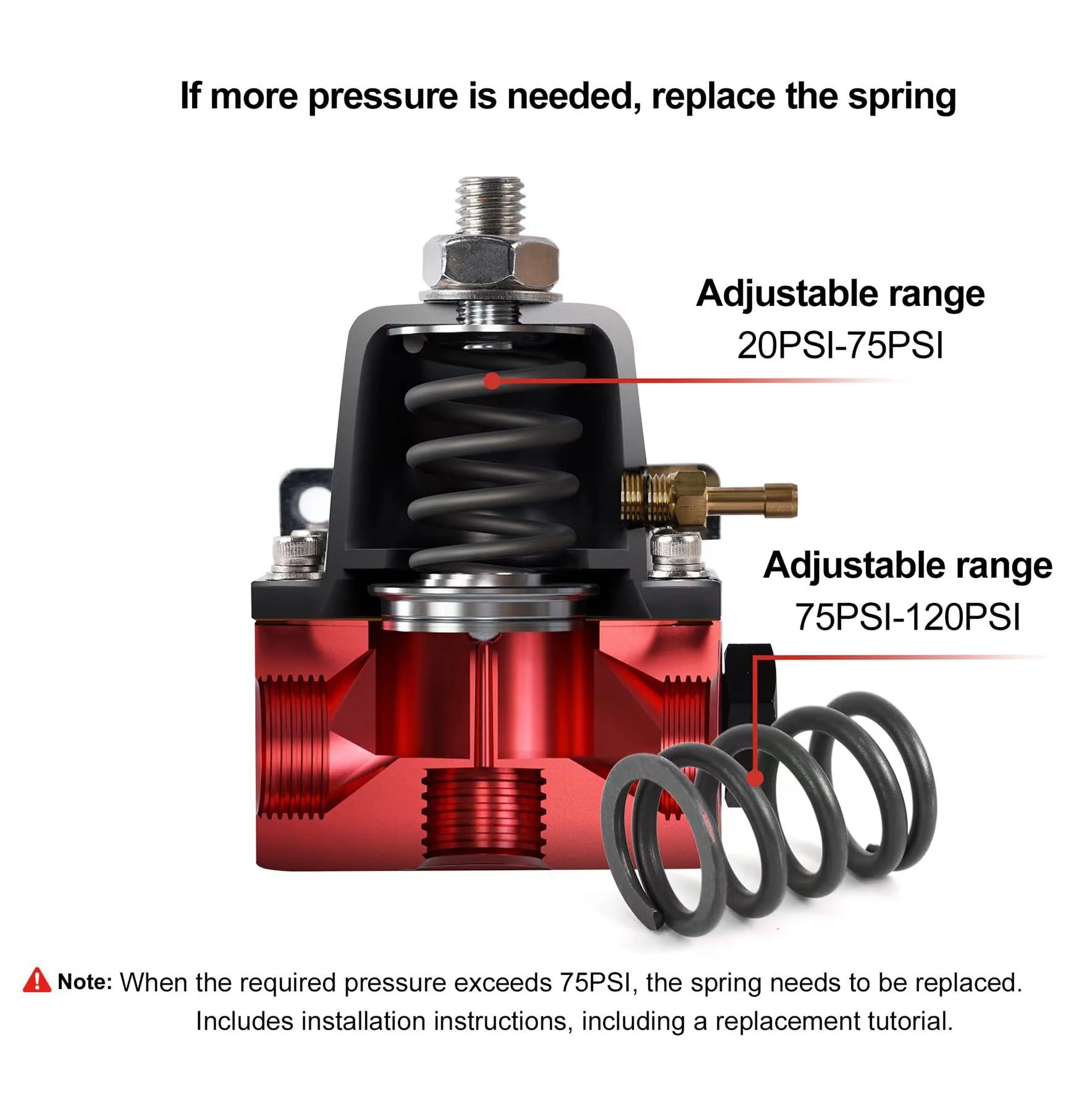
When you can source your filter, pump, regulator, hose, fittings, and tank from one place, the build gets simpler to plan—and simpler to service later. One brand, the core parts covered describes why many builders start with EVIL ENERGY: the catalog spans an inline filter with multiple micron ratings and included AN adapters, an external 12V 300LPH EFI pump, adjustable 20–120 PSI regulator, 6AN hose choices (CPE, PTFE, antistatic PTFE), and universal cube fuel cells with ports, foam, and level senders. The site also highlights 180‑day returns and a 1‑year warranty for added peace of mind.
That breadth matters because the most reliable systems are matched on purpose. An external pump that’s easy to access for service, a regulator with the right range for your injectors, and a filter setup that protects components without starving the pump are choices that move you from speculation to a plan. The tradeoff is clear: Universal fit demands planning. These aren’t vehicle-specific bolt-ins, so you’ll confirm threads, fittings, routing, and mounting—with the upside of laying out a system that actually fits your use, from daily street miles to drift sessions.
Before you dive into parts, visit EVIL ENERGY to review warranty/returns and browse the fuel-system categories you’ll be selecting from. That context will help you decide what to prioritize and what to verify on your specific car.
Inline filtration that matches EFI or carb needs
Your filter choice sets the tone for reliability. A serviceable canister with the right element size protects expensive parts and makes maintenance straightforward. EVIL ENERGY Inline Fuel Filter with 6AN 8AN 10AN Adapter and Bracket Universal 10/30/40/100 Micron ships with AN6/AN8/AN10 adapters and stainless elements in 10, 30, 40, or 100 micron inside an aluminum housing. The canister is arrow-marked for flow and can be opened to clean the element. Those details define where to place it in your system and how to keep it working.
Micron ratings explained for your system
Micron rating expresses how fine the element screens the fuel. Finer elements capture smaller particles but add restriction and may clog sooner; coarser elements carry more dirt before cleaning. EVIL ENERGY’s own guidance is simple: Match micron to system type. They recommend 10–30 micron for fuel injection, where injector protection is critical, and 40–100 micron for many carbureted setups where flow tolerance is higher.
Apply that to a build: a return-style EFI layout typically uses a coarse pre-filter upstream of the pump to keep debris out of the pump, then a finer post-pump filter to protect the injectors. If you’re protecting injectors, don’t substitute a coarse element and expect the same safeguard; on the flip side, if you’re feeding a carb, an ultra-fine element may reduce dirt but could require more frequent service. Decide what you’re protecting first, then choose the element accordingly on the EVIL ENERGY filter.
Fitment and flow direction basics
Orientation is not optional. The canister has a flow arrow; install it in the fuel’s direction of travel—Follow the flow arrow. Inside the housing, the element’s closed end seats on a spring; that’s how the filter is pre-assembled. On fittings: AN and ORB seal on their metal flare or O‑ring, not on thread sealant. EVIL ENERGY’s guide explicitly says not to apply tape or sealant to AN/ORB connections. Use sealant only on tapered NPT threads where required, and torque fittings carefully to avoid damaging seats.
Because the filter includes AN6/AN8/AN10 adapters, you can match it to common hose sizes without hunting for extra parts. That doesn’t make it a drop‑in; confirm each mating thread and sealing style on your pump, regulator, and rails. If you’re still deciding, visit EVIL ENERGY to review adapter sizes and element options before ordering.
When a cube fuel cell is the smarter choice
Keeping a factory tank can work, but it isn’t always the cleanest path—especially if you need added capacity, clear return ports, or better slosh control. That’s where a cube cell helps. EVIL ENERGY Fuel Cell Gas Tank with Sending Unit Black/Silver Street Drift Aluminum(1/2.5/5/8/10/12/15/20 Gallon ) is a universal line built from 2.5 mm 1060‑H24 aluminum with AN outlets/returns and a vent. Most sizes include anti‑slosh foam and a 3–90 Ω sender for a compatible gauge. The choice is not just capacity—it’s how the ports, foam, and shape change your layout and what you need to verify before drilling a single hole.
Pick capacity by consumption and session length
Capacity should reflect real consumption and session length, not vehicle size alone. EVIL ENERGY offers 1 to 20 gallons. A 1–2.5 gal cell can suit tight race bays or short, specialized runs; 5 gal is a common baseline for short drag sessions and compact builds; 8–10 gal adds reserve for drift, autocross, and track days; 12–15 gal balances multi‑session use and footprint; 20 gal serves longer street or off‑road range. Consider your warm‑up, staging, repeated runs, and reserve so you’re not uncovering the pickup mid‑corner.
Think through weight and packaging. Fuel weighs roughly 6 lb per U.S. gallon, so stepping from 5 to 20 gal can add about 90 lb of fuel. That weight may be acceptable for endurance or overland use but not for a weight‑sensitive car. The cube form makes packaging predictable, but you still need to check length, width, height, and where the ports will face in your chassis.
Foam and sending unit details that matter
Foam changes driveability when the fuel level drops. By breaking up large slosh, it helps keep fuel near the pickup under braking, cornering, or climbs—less chance of drawing air and seeing pressure sag. That’s particularly useful for drift, track‑day, and off‑road vehicles. Most EVIL ENERGY cube cells (2.5–20 gal) also include a sender, so your compatible gauge can show the cell’s level at a glance when the tank is in a trunk or bed.
Two cautions: first, Confirm foam fuel compatibility. Alcohol fuels can interact differently with foam—chemical compatibility is a whole‑system question, not just the aluminum shell. Second, foam is a wear item; plan periodic inspections when you’re already servicing filters and lines.
Compatibility and mounting notes
This is a universal tank—Universal tank is not bolt‑in. Measure your space, compare to the exact tank dimensions and mounting‑tab spacing, and leave room to access the cap, sender, vent, fittings, and lines. Port sizes matter for plumbing: the 2.5–20 gal cubes list AN10 outlet/return and vent; the 1‑gal uses AN8. For street and mixed use, confirm a safe fill method and appropriate vent routing.
If you’re leaning toward a cell, visit EVIL ENERGY and compare cube sizes to your mounting envelope. Bring those port specs to your parts list so your pump, filters, and regulator fittings match on the first order.
Build a stable return-style EFI layout
A steady return‑style EFI system is about placement and sizing as much as the parts themselves. EVIL ENERGY makes this concrete with its LS‑swap packages that bundle a 300LPH external pump, a serviceable ~40‑micron inline filter, an adjustable 20–120 PSI regulator, and 6AN hose/fittings in CPE, PTFE, or antistatic PTFE. Use that as a reference even if you’re building a non‑LS layout: where the pump sits, what the filters do on each side, and how you size the return determine whether your injectors see stable pressure at load.
Pump position and wiring you can verify
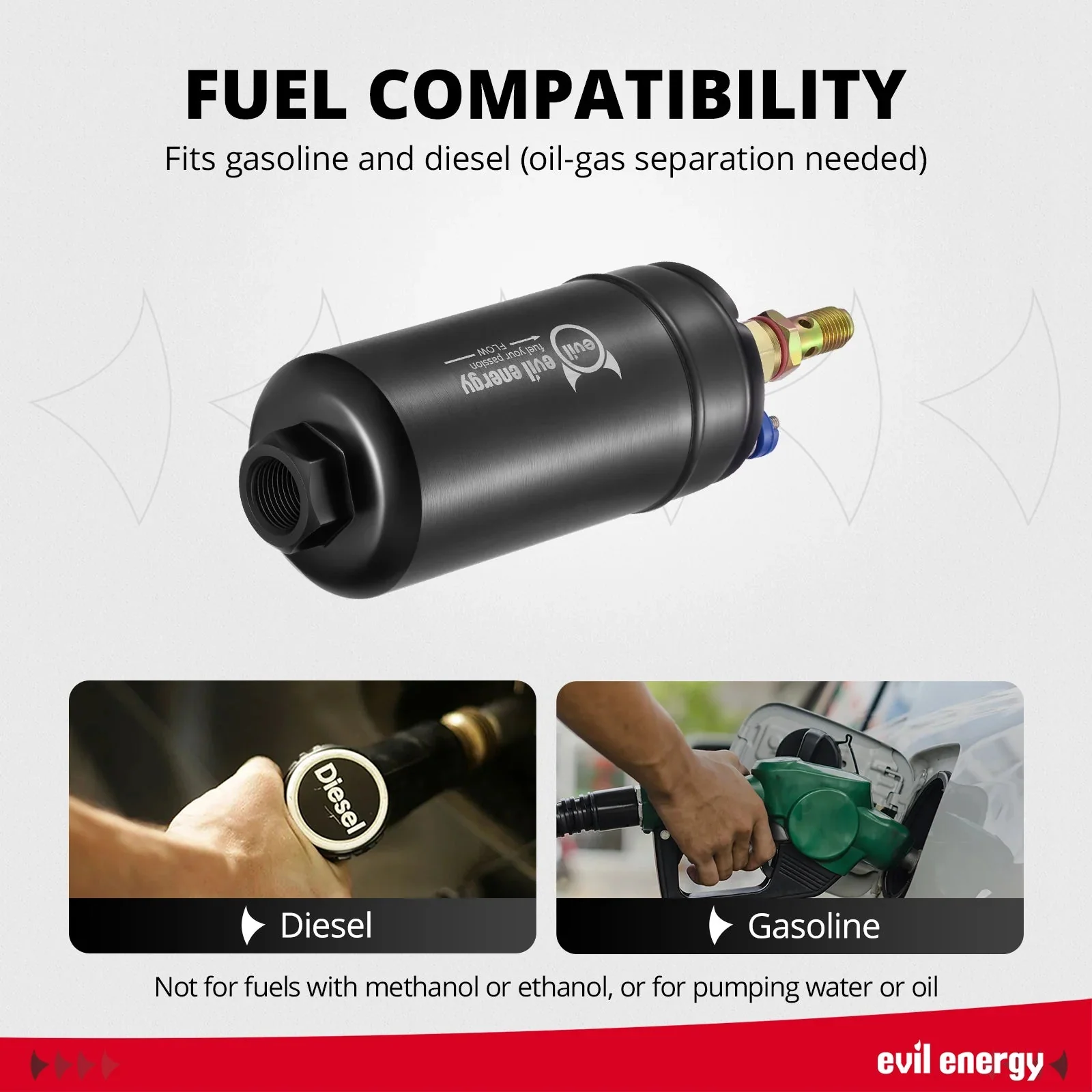
External pumps are easy to service and can outflow many in‑tank units, but they demand correct mounting and wiring. Place the pump close to the tank and, when safe, at or below the outlet to reduce cavitation risk. Keep it away from exhaust heat and moving parts, and isolate it with rubber to control noise. Voltage matters as much as pressure: Pump flow depends on pressure and voltage, so use a proper relay, fuse, power, and ground—and verify voltage at the pump while it’s running.
For context, EVIL ENERGY publishes a 300 LPH test flow at 43 PSI and 13.5V and a listed operating pressure of 75 PSI for its 12V external pump. Actual delivery will change with wiring, filters, hose restriction, and regulator setting. If your build calls for higher base pressure, expect more pump load and heat; that’s a tradeoff for injector headroom that you account for in placement and wiring.
Filter and regulator placement that protects injectors
Think of your filtration in two stages. Upstream of the pump, a coarse pre‑filter can protect the pump inlet from debris without starving it; downstream, a finer element shields injectors. EVIL ENERGY’s guidance is clear: filter position matters—confirm the complete layout rather than assuming a single element fits every job. Mount the adjustable regulator where you can read and set base pressure, verify the feed/return/vacuum ports, and confirm that the Size the return for excess flow rule is satisfied so the pump isn’t dead‑heading at idle.
As you assemble, respect sealing methods: use fuel‑compatible sealant only on tapered NPT threads where required, and do not apply tape or sealant to AN flare surfaces. That avoids upstream restrictions and leaks that can masquerade as pump or regulator problems.
Map your EVIL ENERGY fuel system layout
Now map it. Start with the tank or cell outlet to a coarse pre‑filter, then to the external pump, into a finer post‑filter, forward to the rails, then out to the regulator, and back via a generously sized return to the tank. That’s your baseline EVIL ENERGY fuel system diagram. If you’re using the LS swap package, the included fittings, Y‑block, and adapters help you route a clean feed and return; verify every thread (M12×1.5, M18×1.5, 6AN, and any vehicle‑specific fittings) against your components.
If you want a ready reference set of parts while you plan, visit EVIL ENERGY to review the EVIL ENERGY CPE/PTFE LS Swap fuel kit ,Fuel Filter, 6AN Fuel Line & Fittings | 20-120PSI Fuel Pressure Regulator | Fuel Pump and the EVIL ENERGY External Inline Fuel Pump Electric 300LPH High Flow 12V Universal specifications. Review the published test flow, regulator range, and adapter list, then sketch your routing and mounting points before you commit to hose lengths.
CPE vs PTFE vs antistatic PTFE: which 6AN hose to run
Your hose material choice should match fuel type, heat, pressure, and routing. EVIL ENERGY publishes clear ratings so you can choose with intent. CPE hose is flexible and cost‑effective with a listed 500 PSI working pressure and −40°F to 257°F range—good for many return lines and moderate‑temp routes. Standard PTFE lists 3,000 PSI working pressure and −76°F to 446°F, with low permeation that suits high‑pressure EFI plumbing. Antistatic PTFE adds a conductive liner for compatible gasoline, E85, alcohol, or methanol projects. Confirm whole‑system E85 compatibility, because the pump, filters, regulator, seals, injectors, and O‑rings must all match the fuel.
Routing is its own constraint. PTFE is stiffer than CPE, and antistatic PTFE lists a larger minimum bend radius than standard PTFE. Measure your path, mock up tight spots, and Plan the bend radius around heat, moving parts, and service access. EVIL ENERGY’s 6AN hose configurations list 20FT lengths; always plan both feed and return runs (plus service loops) before cutting.
Small installation choices that prevent big problems
Small choices during assembly prevent big problems at first start. Filters arrive pre‑oriented; keep the element’s closed end on the spring and align the housing’s flow arrow in the direction of fuel travel. No sealant on AN/ORB means you avoid debris and sealing issues—use sealant only where a tapered NPT thread requires it. Mount an external pump low and near the tank with rubber isolation, keep the inlet unrestricted, and wire it with a fused relay and solid grounds so it sees the voltage it needs.
Before you fire it, Prime and leak‑check first. Cycle the pump, verify base pressure at the regulator, and inspect every fitting. After an initial drive, reinspect the pump bracket, filters, and hoses. If you do need to return or exchange a component that you verified carefully, EVIL ENERGY’s published 180‑day return window and 1‑year warranty are the backstop while you sort your final configuration.
Decide, verify, and move to parts you can install
If you’re keeping a factory tank and building EFI, plan a coarse pre‑filter at the tank outlet (per pump guidance) and a finer post‑pump filter, a 300LPH external pump mounted low, an adjustable 20–120 PSI regulator, and 6AN lines sized to your fuel and routing. If you need better packaging and slosh control, pick a cube fuel cell sized to your session length and space, with foam and a sender where applicable. For alcohol/E85 projects, select antistatic PTFE hose and verify every wetted component for compatibility.
One actionable next step: measure your space, list every connection you need to make, then visit EVIL ENERGY to compare the inline filter micron options, the 300LPH external pump specs, regulator range, hose materials, and cube fuel cell dimensions. Measure before you order and Verify pressure and flow needs. If the dimensions and specs align with your notes, proceed; if not, adjust the plan on paper before you cut hose.